Al cortar tiras de acero inoxidable con cuchillas circulares, ¿debe ajustar la cuchilla o reemplazarla cuando se forman rebabas en el borde?
June 02, 2026
Nuestra fábrica lleva 30 años produciendo innumerables productos para diversos sectores, contribuyendo significativamente a la industria del corte. ¡Permítanos personalizar las herramientas de corte que necesita!
Mabu - Director ejecutivo de RisingBamboo
En la producción de corte de tiras de acero inoxidable, el problema más problemático es cuando Las cuchillas circulares cortan la tira de acero inoxidable. Se trata de rebabas en los bordes. Ante las rebabas, los operarios suelen enfrentarse a un dilema: ajustar la cuchilla podría permitir su uso continuado, pero temen que solo solucione el problema; reemplazarla directamente resulta costoso. Mingbai Mechanical Tool Technology Co., Ltd., con años de experiencia en el corte de acero inoxidable, le ayuda a establecer un criterio para determinar cuándo basta con ajustar la cuchilla y cuándo es necesario reemplazarla.
1. Tres causas principales de las rebabas
La tira de acero inoxidable tiene una alta tenacidad y un endurecimiento por deformación severo, lo que hace que la formación de rebabas sea más compleja que con el acero al carbono ordinario. Hay tres categorías principales:
· rebabas de parámetros: Causado por ajustes incorrectos de la separación, superposición, tensión, etc. de la hoja. En este caso, la hoja en sí está intacta y el ajuste es suficiente.
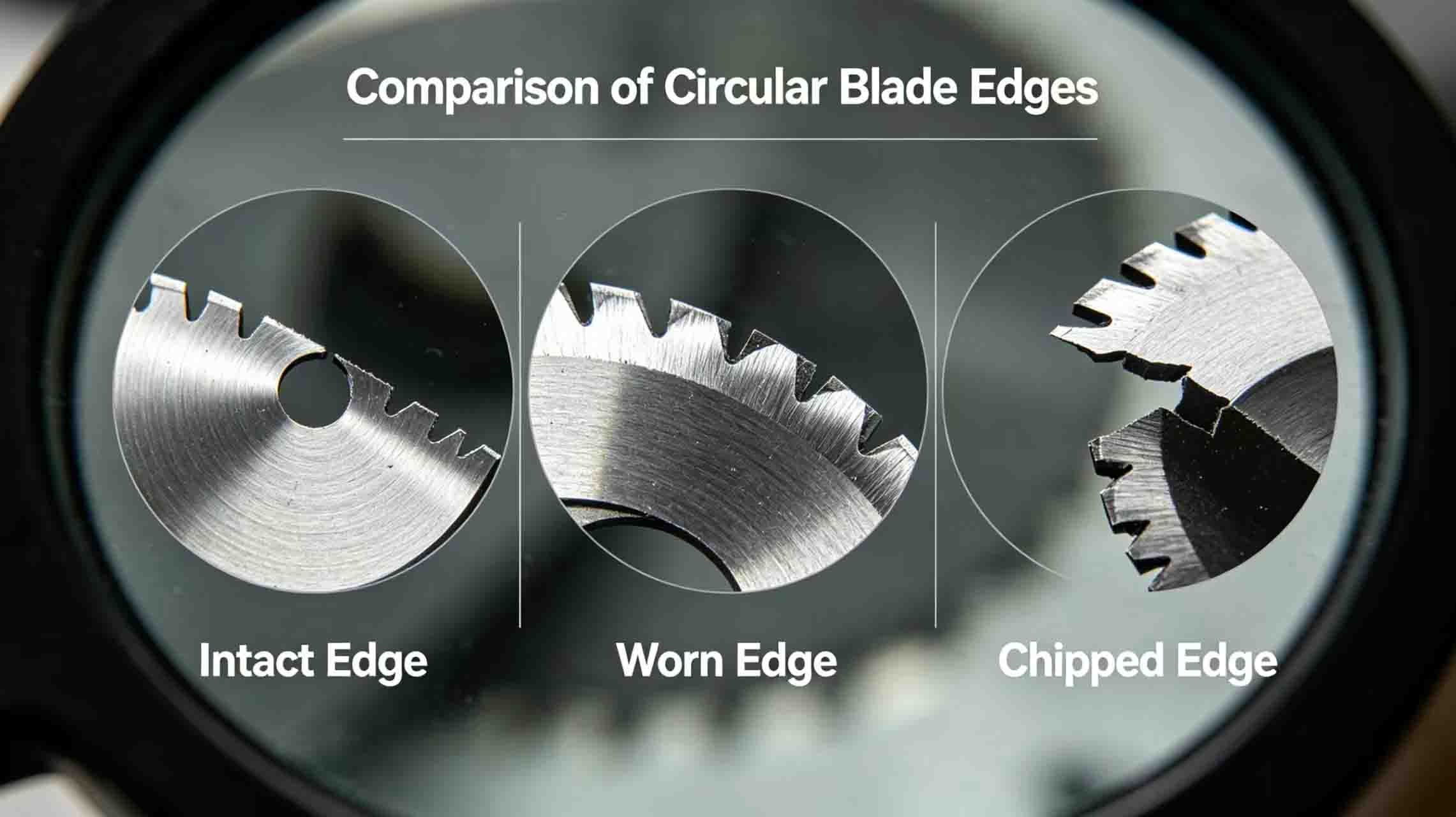
· Usar rebabasEl filo se desgasta y se redondea de forma natural, perdiendo nitidez. En este caso, es necesario reafilarlo o reemplazarlo.
· Rebabas dañadasEl borde presenta astilladuras, pequeñas muescas o descamación del revestimiento. En este caso, es necesario reemplazarlo o repararlo en fábrica.
2. Método de evaluación en tres pasos: ¿Ajustar o reemplazar?
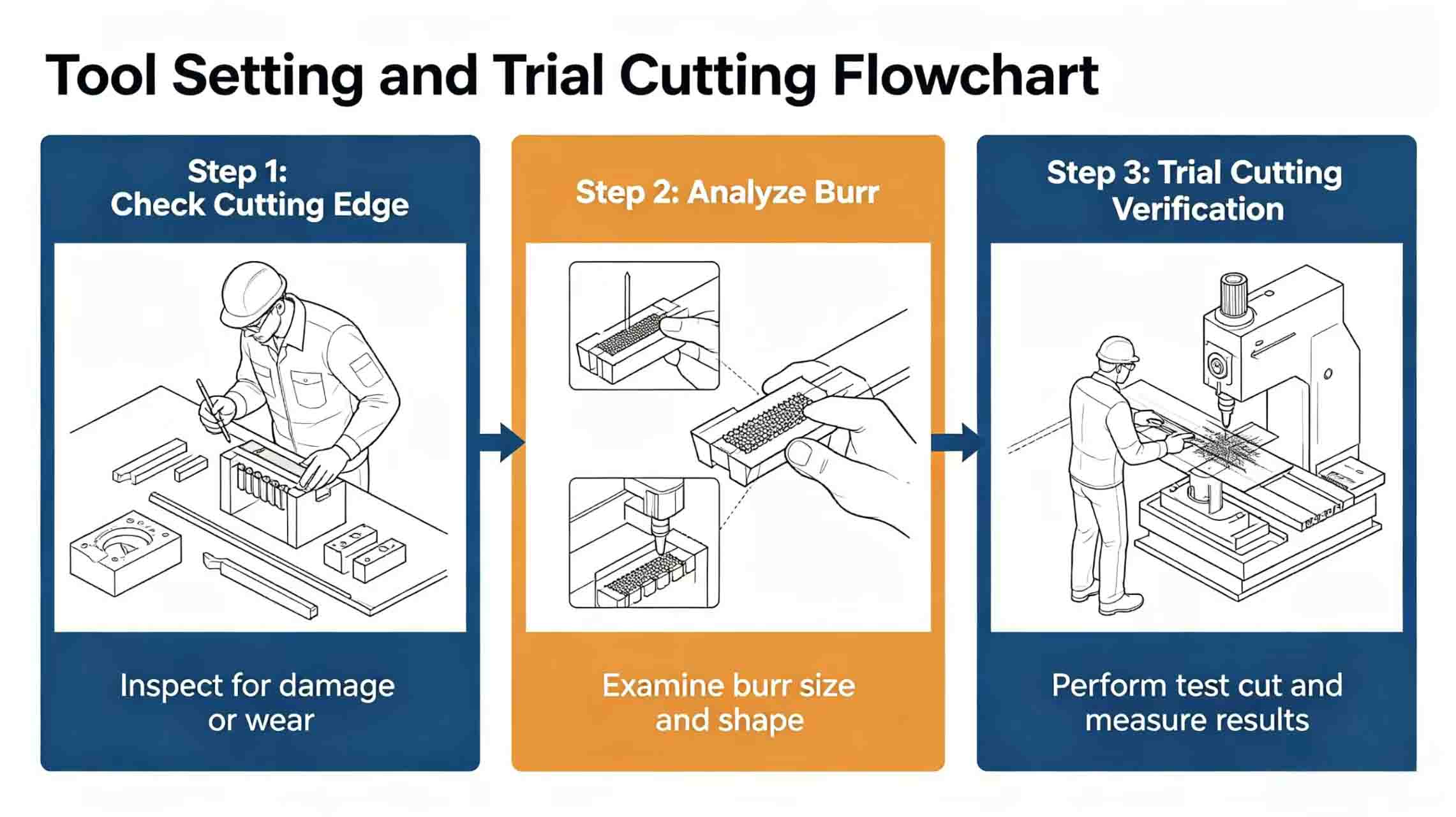
Paso 1: Deténgase e inspeccione el borde.
Utilice una lupa o observe a simple vista con atención.el estado del filo de la hoja circular. Si el borde es brillante, sin muescas y sin desgaste evidente (ancho de línea blanca) < 0,1 mm), la hoja en sí está bien y el problema radica en los parámetros. Si encuentra rebabas en los bordes acompañadas de astillamientoLa cuchilla está dañada y debe ser reemplazada.
Paso 2: Analizar la morfología de la rebaba
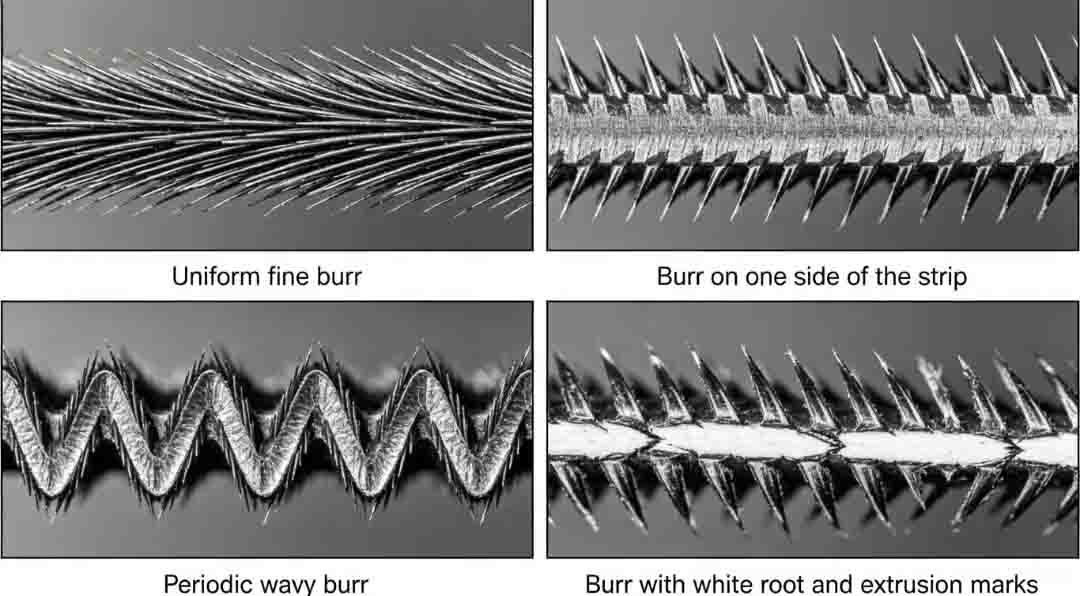
· Las rebabas son uniformes y finas, y aparecen en ambos lados de la tira → posiblemente se deba a un espacio excesivo o a una cuchilla desafilada; primero intente reducir el espacio entre 0,01 y 0,02 mm.
• Las rebabas aparecen solo en un lado de la tira → desalineación axial de las cuchillas superior e inferior; ajuste la posición axial.
• Las rebabas aparecen en un patrón periódico ondulado → desviación excesiva de la cuchilla o del eje de la cuchilla; mida la desviación; si la desviación es > 0,01 mm, es necesario reafilar o reemplazar la cuchilla.
· Las rebabas tienen una base blanca con marcas de extrusión → espacio demasiado pequeño; aumente el espacio.
Paso 3: Verificación del corte de prueba
Después de ajustar los parámetros, haga un corte de prueba. Si las rebabas se reducen significativamente o desaparecen, Ajuste de rebabas para el corte de tiras de acero inoxidable es eficaz y la cuchilla puede seguir utilizándose. Si persisten las rebabas después del ajuste, o si aparecen nuevas astillas en el filo, indica que La cuchilla circular ha alcanzado su límite de desgaste. y la cuchilla debe ser reemplazada.
3. Cuatro situaciones que requieren el reemplazo de la cuchilla
1. El borde presenta astillamientos visibles (ancho > 0,2 mm).
2. El ancho de la zona de desgaste del borde supera los 0,3 mm.
3. Las rebabas no se pueden eliminar después de volver a afilar.
4. Grietas en la superficie de la hoja o desprendimiento de una gran área del revestimiento.
4. Tres parámetros clave para el ajuste
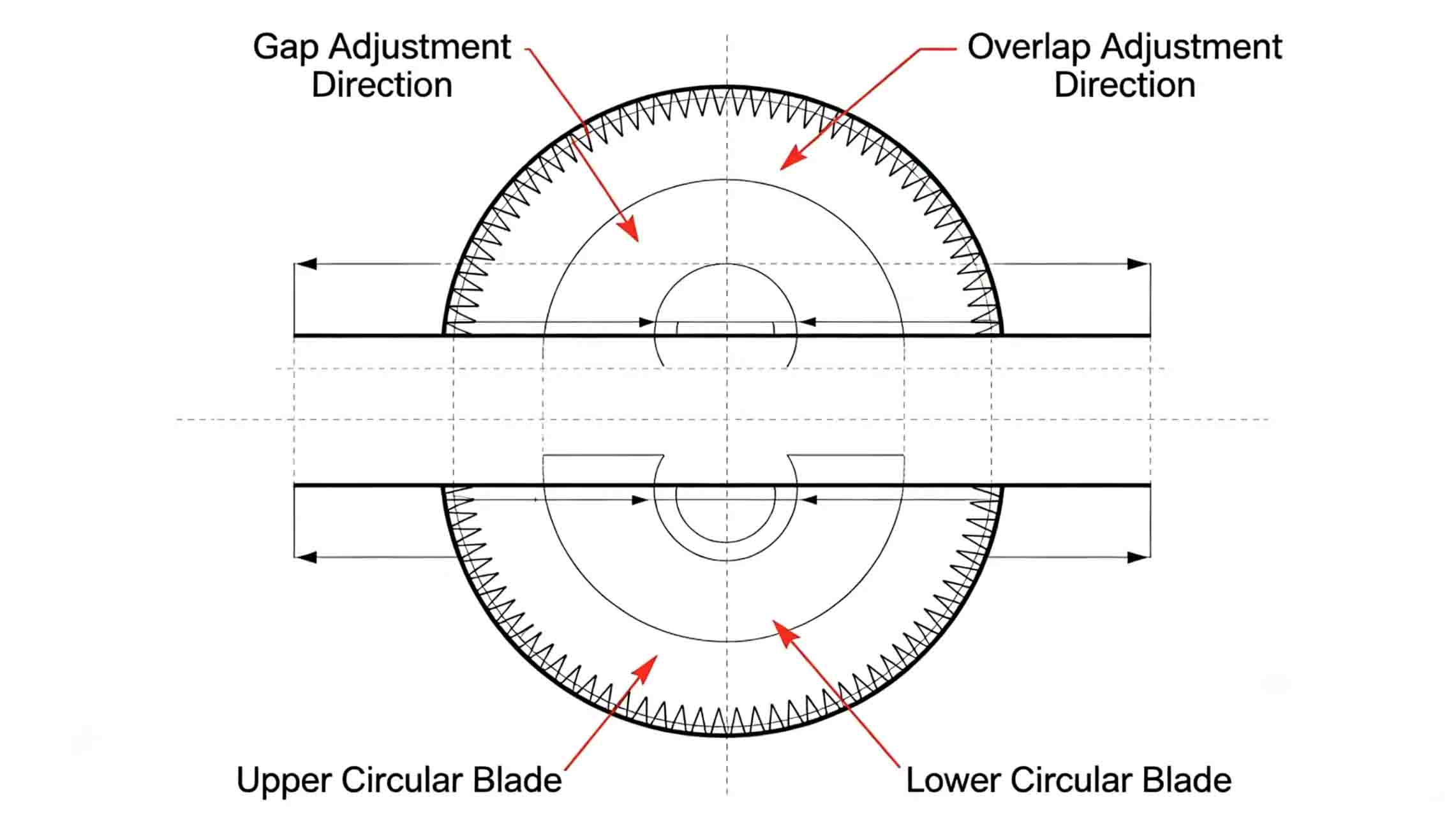
• Separación: La separación recomendada para la tira de acero inoxidable es del 6 % al 10 % del espesor del material. Una separación demasiado estrecha produce rebabas blancas extruidas; una separación demasiado amplia produce rebabas que provocan desgarros.
• Solapamiento: Generalmente entre el 30 % y el 50 % del espesor del material. Un solapamiento insuficiente impide el corte; un solapamiento excesivo acelera el desgaste.
· Lubricación: El corte longitudinal de acero inoxidable requiere suficiente fluido de corte; se recomienda la lubricación con niebla de aceite, con un caudal de 10-20 ml/h.
5. Precauciones después del reemplazo de la cuchilla
Incluso después de reemplazarla con una cuchilla nueva, ajuste después del reemplazo de la cuchilla circular No se debe descuidar. El diámetro exterior de las cuchillas nuevas puede variar ligeramente, por lo que es necesario volver a medir y ajustar la holgura. Se recomienda establecer primero el valor teórico con un calibrador de espesores y luego realizar ajustes finos mediante pruebas de corte.
6. Recomendaciones de Mingbai Technology
Mingbai Mechanical Tool Technology Co., Ltd. recomienda a sus clientes aplicar el principio de "ajustar primero, reemplazar solo cuando sea necesario". Inspeccione el filo en cada turno y registre la evolución de las rebabas. Si la frecuencia de los ajustes aumenta (por ejemplo, si se necesita ajustar cada 2 horas), significa que la cuchilla está llegando al final de su vida útil y se debe proceder a su reemplazo o al afilado en fábrica.
Para juicio de vida de cuchillas circulares para tira de acero inoxidableOfrecemos servicios de diagnóstico gratuitos in situ para ayudarle a distinguir con precisión entre "debería ajustarse" y "debería reemplazarse".
Conclusión
Al cortar tiras de acero inoxidable con cuchillas circulares, aparecen rebabas en los bordes, por lo que no es necesario reemplazar la cuchilla de inmediato. Primero, inspeccione el estado del borde, luego analice la morfología de las rebabas y, finalmente, verifique mediante un corte de prueba. En la mayoría de los casos, un ajuste adecuado de los parámetros puede solucionar el problema. Sin embargo, cuando el borde presenta astillamiento o desgaste severo, el reemplazo definitivo de la cuchilla es, de hecho, la opción más económica. Mingbai Technology está a su disposición para brindarle asesoramiento profesional.
 Correo electrónico
:
Correo electrónico
:  Tel.:
Tel.: 

 es
es 


 Red IPv6 compatible
|
Red IPv6 compatible
|